Claude, Irac Practice.
The irac-practice skill has Claude pose a hypothetical and require Issue, Rule, and Application in order before ever checking the Conclusion, so a correct final answer without shown reasoning earns nothing.
Does practicing IRAC with Claude mean Claude hands you the finished answer? No. It walks you through the steps in a fixed order, and it will not skip ahead to the end. The irac-practice skill is built specifically to prevent that shortcut.
What a skill is here
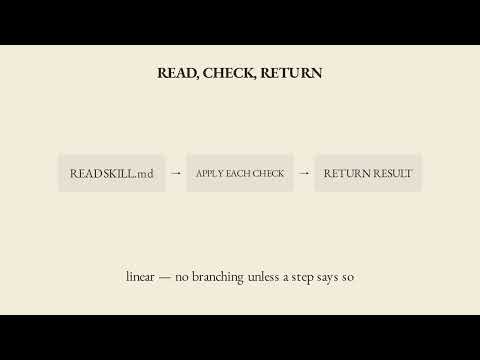
The irac-practice skill is a folder Claude reads before it acts. One file, SKILL.md, holds the whole instruction set for drilling IRAC in plain language, with no hidden logic. Claude reads it, then acts on it; the file is the program defining exactly how the drill runs.
A linear drill: pose, pause, check
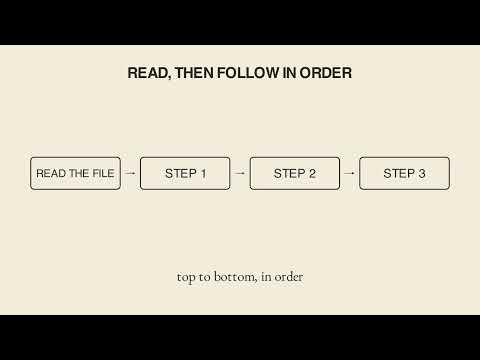
The drill lives in a step section, and Claude reads each step in order: pose the hypothetical, then wait for your Issue, then your Rule, then your Application, in that exact order, before it looks at your Conclusion at all. This is linear, with no skipping ahead unless a step explicitly says otherwise. That ordering is the whole point of the drill. IRAC, Issue, Rule, Application, Conclusion, is a method for legal analysis, and the skill enforces going through the method rather than jumping to the answer.
The check that actually matters
One check inside the skill is specific and worth naming directly: stating the right Conclusion without showing the Application earns nothing. The Application is where the Rule actually meets the facts, worked through one fact at a time. A Conclusion that skips that step is a guess wearing the right answer, not evidence that the reasoning behind it was sound.
Claude checks the process, not just the outcome
Claude is not grading your Conclusion in isolation. It is checking whether you showed the Application, one fact at a time, on the way to it. That is a deliberate design choice: a student who has memorized or guessed the correct outcome for a given hypothetical, without being able to show how the rule applies to the specific facts, has not demonstrated the skill IRAC is meant to build. The drill exists to catch exactly that gap.
Running the drill yourself
The practical exercise is to give Claude a short fact pattern, one paragraph, and ask it to read the irac-practice skill without giving you the answer. It should ask for your Issue first, then your Rule, then your Application, and only check your Conclusion after all three have been given. That sequencing forces the same discipline the skill is built around: reasoning shown before an answer is accepted.
Why the order is the point
The value of this drill is not in producing a correct final answer faster. It is in forcing the intermediate steps to be shown and checked before the final answer is even considered. A student who can only produce the Conclusion, without walking through how the Rule meets the facts, has not actually practiced the skill the drill is meant to build. Enforcing the order is what turns this into practice rather than a shortcut to the answer.
Key takeaways
- The irac-practice skill poses a hypothetical and requires Issue, Rule, and Application, in that order, before ever checking the Conclusion.
- Claude will not skip ahead to give the finished answer; the process is linear unless a step says otherwise.
- A correct Conclusion without a shown Application earns nothing, because it does not demonstrate the underlying reasoning.
- Claude checks whether the Application connects the Rule to the facts one fact at a time, not just whether the final answer is correct.
- Running the drill on your own fact pattern requires giving Claude a short hypothetical and letting it withhold the answer until all three steps are shown.
Who this is for
Law students practicing legal analysis who want a structured way to drill the IRAC method and get caught when they try to skip straight to a Conclusion without showing the reasoning behind it.
Full transcript(auto-generated, with timestamps)
[0:00]Someone asked if practicing Iraq with Claude means Claude hands you the finished answer. It doesn't. It walks you through the steps. So, does practicing Iraq with Claude give you the steps? A skill is a folder Claude reads before it acts. This one is called Iraq practice. It's one file skill. MD holds the whole instruction set for drilling Iraq written in plain language, no hidden logic. Claude reads it then acts. The file is the program. The drill lives in a step section. Claude reads each step in order. Pose the hypo then wait for your issue, your rule, your application in that order. Linear, no skipping ahead unless a step
[0:34]Says otherwise. One check inside it is specific. Stating the right conclusion without showing the application earns nothing. The application is where the rule actually meets the facts, one fact at a time. A conclusion that skips it is a guess wearing the right answer. Claude isn't grading your conclusion. It's checking whether you showed the application one fact at a time on the way to it. Your turn. Paste this into Claude. Give me a short fact pattern, one paragraph. Read the Iraq practice skill and don't give me the answer. Ask me for my issue first, then my rule, then my application, and only check my conclusion after I've given all three.
[1:09]Claude Iraq practice, Liam In for Bear.