Did Claude Learn Contract Law From a Skill? No — Here's What Actually Happened
A skill called material-contract-schedule sounds like a deal-review upgrade, but the video shows it is a folder holding one SKILL.md file of plain-language steps. Claude follows it in order, so the schedule has the same shape every time, without new expertise.
It is easy to assume that Claude learned contract law from a skill called material-contract-schedule. The video says it did not. Claude was handed a file of instructions, and material-contract-schedule is simply the name of one such file. The rest of the episode, from the Claude Basics series, explains what is actually inside it.
Why the name misleads
The skill sounds like a deal-review upgrade, as if Claude had studied M&A contracts and come back knowing something it did not know before. The video points out that nothing in the model changes. A simple test shows it: delete the skill's folder, and Claude does not forget any contract law, because there was nothing to learn. It just stops following that one routine.
What a skill actually is
A skill is a folder, and in this case the folder holds a single file called SKILL.md. The file contains instructions, written in plain language, for turning a stack of contracts into a structured disclosure schedule. Claude reads it before it starts.
How Claude uses the file
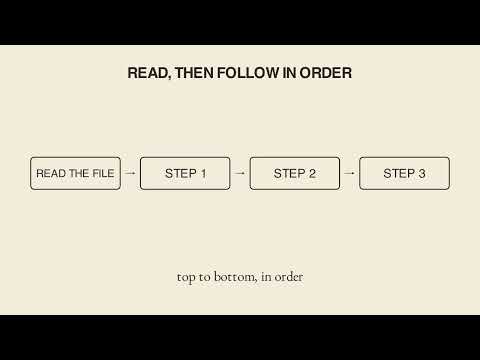
Claude reads the file from top to bottom and works through it step by step, in the order it is written. There is no branching unless the file itself says to branch. That is why the video calls a skill a specification, not a new power.
The payoff and the limit
The payoff is consistency: the same schedule structure every time, with one row per contract and the same columns filled in. The limit is that anything outside those written steps leaves Claude off the map. So the skill never taught Claude how to judge a contract. It guarantees only that each time the skill runs, Claude reads the same file and produces the same schedule structure.
Neither outcome proves anything on its own
The video then reads the result in both directions:
- A schedule with every row filled in does not prove every contract was actually checked against the file's criteria, because a cell can be filled in without a fact behind it.
- A schedule with gaps does not prove the skill is broken, because it may simply mean the file asked for something the contracts never said.
A skill does not teach Claude what counts as a material contract. It is a file of steps Claude reads before it starts, so the schedule comes out in the same shape each time.
Key takeaways
- A skill called material-contract-schedule does not give Claude new legal knowledge.
- A skill is a folder holding one SKILL.md file of plain-language instructions.
- Deleting the folder does not make Claude forget anything, since nothing was learned.
- Claude reads the file top to bottom and follows the steps in order, branching only if the file says to.
- The payoff is the same schedule structure every time, with one row per contract.
- The limit is that anything outside the written steps is off the map.
- A full schedule and a schedule with gaps are each not proof on their own.
Try it yourself
Pick one document you produce the same way every time. Ask Claude to write a SKILL.md for it, using plain language and ordered steps. Then ask it to read the file back and walk you through exactly what it will do before it does it. That review is a quick way to see whether the instructions say what you meant.
Full transcript(auto-generated, with timestamps)
[0:00]You guess Claude learned contract law from a skill called material contract schedule. It didn't. It was handed a file of instructions. Material contract schedule just names one such file. Let's see what's actually inside it. Here Claude has a material contract schedule skill and it sounds like a deal review upgrade, like it studied M and a contracts and came back knowing something it didn't before. But nothing in the model changes. Delete the skills folder and Claude doesn't forget contract law. There was nothing to learn. It just stops following that one routine. Here's what a skill actually is, one file. Material contract schedule, for instance, is a folder holding a single
[0:37]Skill. MD instructions for turning a stack of contracts into a structured disclosure schedule written in plain language Claude reads before it starts. Claude reads that file top to bottom and works through it step-by-step in the order it's written, no branching unless the file itself says branch. That makes a skill a specification, not a new power. The payoff, the same schedule structure every time, one row per contract, the same columns filled in. The limit, anything outside those written steps and Claude is off the map. So material contract schedule never taught Claude how to judge a contract. It just guarantees that every time material contract schedule runs, Claude
[1:16]Reads that same file and produces the same schedule structure. That's the whole trick. Watching Claude produce a schedule with every row filled in doesn't prove every contract was actually checked against the file's criteria. A cell can be filled in without a fact behind it. And a schedule with gaps in it doesn't prove the skill is broken. It may just mean the file asked for something the contracts never said. A skill doesn't teach Claude what counts as a material contract. It's a file of steps Claude reads before it starts, so the schedule comes out in the same shape every time. Your turn. Paste this into Claude. Pick one document I
[1:51]Produce the same way every time. Write me a skill MD for it, plain language ordered steps, then read it back to me and walk me through exactly what you'll do before you do it. Claude material contract schedule, Liam in for Bear.
More from Claude
 2:02
Has Claude Been Tracking Your Case? No — Here's What's Really Happening
 2:07
Claude, Marketing Claims Review.
 1:13
Does Closing a Matter in Claude Delete It? Not Quite
 2:03
Claude Picked Up a Skill Called "log-leave" — Can It Approve Leave Requests?
 2:07
Does Claude's matter-intake Skill Decide Which Clients to Take? No.
 1:50