Does Closing a Matter in Claude Delete It? Not Quite
This Claude Basics episode explains what a skill is and what matter-close does with it. Closing a matter archives it out of the active portfolio every time, captures only what the file specifies, and never deletes the record.
When a legal matter is finished, it is natural to wonder whether closing it in Claude deletes it. This Claude Basics episode answers that question with a clear no, or more exactly, not quite. The matter-close skill captures the outcome, the final exposure, and the lessons, then archives the matter out of the active portfolio while keeping the record. The video also uses the example to show what a Claude skill actually is.
The question: can Claude delete a matter once it is done?
The video opens with someone asking whether Claude can delete a matter once it is finished. The short answer is that it archives the outcome and lessons without deleting anything. The rest of the video walks through what actually happens when you run it.
A skill is a folder Claude reads before it works
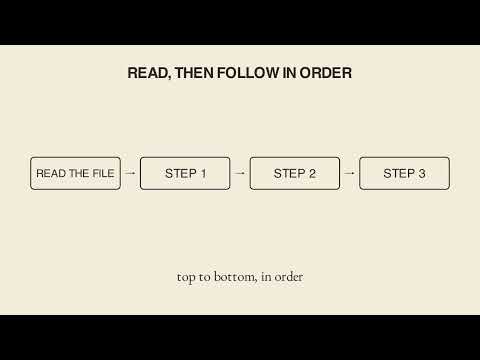
The explanation starts with the idea of a skill. A skill is a folder that Claude reads before it begins work. This one is called matter-close. Inside it, the SKILL.md file holds the full instruction set in plain language, with no hidden logic. Claude reads the file and then acts on it. In the video's phrasing, the file is the program.
Because the instructions are written out in ordinary words, you can open the file and see exactly what the skill will do, rather than guessing from its name.
How the pipeline runs
The pipeline sits in the Steps section of the file. Claude reads each step in order and then runs it. The process is linear, with no branching unless a step itself says so. That predictability is what makes the result repeatable from one matter to the next.
The specific constraint: archive, do not delete
The video highlights the constraint that makes this skill worth understanding. It captures the matter's outcome, its final exposure, and its lessons, and then archives the matter out of the active portfolio without deleting the record.
The video's claim is that if you stay inside that scope, the result holds its shape every time. Closing a matter archives it out of the active list, and it never deletes the record. What gets captured is only what the file tells it to capture, and nothing beyond that.
What this means in practice
For a legal team, the word "close" can be ambiguous. It could mean the work is over, the file is hidden, or the data is gone. The video shows that for this skill the meaning is narrow and written down: three things are recorded, the matter leaves the active list, and the record stays. That is the kind of clarity the video suggests you should look for before trusting any tool's wording.
The video also carries a short disclaimer that it is an educational explainer, not sponsored by or affiliated with Anthropic, and not legal advice.
Key takeaways
- A skill is a folder Claude reads before it works.
- The SKILL.md file holds the full instruction set in plain language, with no hidden logic.
- Claude follows the Steps section in order, with no branching unless a step says so.
- Matter-close captures the outcome, final exposure, and lessons.
- It then archives the matter out of the active portfolio.
- The record is never deleted.
- It captures only what the file tells it to.
Try it yourself
Ask Claude to close a matter by capturing the outcome, final exposure, and lessons, and then archiving it out of the active portfolio without deleting the record. Have it read the matter-close skill first, tell you exactly what it needs from you before it starts, and walk you through what it will do before it does it.
Full transcript(auto-generated, with timestamps)
[0:00]Someone wondered, "Can Claude delete a matter once it's done?" Not quite. It archives the outcome and lessons without deleting anything. Here's what actually happens when you run it. A skill is a folder Claude reads before it works. This one is matter close. The skill MD file holds the full instruction set in plain language, no hidden logic. Claude reads it then acts. The file is the program. The pipeline sits in the step section. Claude reads each step in order then runs it. Linear, no branching unless a step says so. The constraint is specific. Capture the matter's outcome, final exposure, and lessons then archive it out of the
[0:35]Active portfolio without deleting the record. Stay inside that scope and the result holds its shape every time. Closing a matter archives it out of the active list every time. It never deletes the record. What gets captured is only what the file tells it to. Your turn. Here's the prompt. Read it with me. "I want to close a matter, capture the outcome, final exposure, and lessons then archive it out of the active portfolio without deleting the record." Read the matter close skill. Tell me exactly what you need from me before you start and walk me through what you will do before you do it. Claude matter
[1:08]Close. Lay 'em in for bear.
More from Claude
 2:07
Does Claude's matter-intake Skill Decide Which Clients to Take? No.
 2:02
Has Claude Been Tracking Your Case? No — Here's What's Really Happening
 2:10
Does Claude Remember Your Firm's Habits? No — Here's What Actually Runs
 2:06
Did Claude Learn Contract Law From a Skill? No — Here's What Actually Happened
 1:52
Does Claude Already Know Every Matter You Have? (No — Here's Why)
 2:07