Claude Picked Up a Skill Called "log-leave" — Can It Approve Leave Requests?
The video explains that a skill called log-leave does not give Claude authority to approve leave. A skill is one SKILL.md file Claude follows step by step, so it makes logging consistent while everything outside the steps stays with you.
The video starts from a guess: that once Claude picks up a skill called log-leave, it can decide whether to approve an employee's leave request. It says that is wrong. Claude follows a written checklist, and the video walks through what that file is and what it can and cannot do.
Nothing in the model changes
A skill named log-leave sounds as if Claude itself can now decide whether to approve someone's leave. But nothing in the model changes. Delete the skill's folder, and Claude does not lose any approval authority, because there was none to begin with. It simply stops following that one checklist for logging a leave request.
What a skill actually is
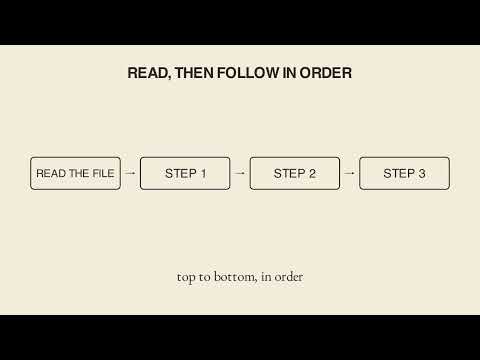
A skill is a folder holding a single file, SKILL.md. For log-leave, that file contains instructions for logging a leave request step by step, written in plain language that Claude reads before it starts. Claude reads it top to bottom and works through it in the order written, with no branching unless the file itself says to branch.
That makes a skill a specification, not new judgment.
The payoff and the limit
The payoff is that the same kind of log entry is produced for every leave request, every time. The limit is anything outside the written steps. Whether the leave even qualifies is not something the checklist covers, and Claude has no special opinion about it. Log-leave never gave Claude authority to approve a request; it only guarantees that each time it runs, Claude reads the same file and logs the leave the same way.
What watching it work does not prove
The video adds a caution about how to read Claude's output. Watching Claude log a leave request cleanly does not prove it judged the situation correctly. A checklist can be followed to the letter and still miss what it was never asked to check. And watching Claude flag an entry as incomplete does not prove something is wrong; it may be a case the checklist does not cover. Anything outside those steps is still on you.
What the video does not claim
The video does not describe what an actual log-leave file instructs, because that file lives in a collection not reachable from the build. The name is used only as an example of a skill-shaped folder. What it shows is what is generally true about how any Claude skill works.
Key takeaways
- A skill named log-leave does not give Claude the authority to approve leave.
- Deleting the skill folder removes the checklist, not any approval power.
- A skill is a folder with one SKILL.md file of plain-language steps.
- Claude reads the file before starting and follows the steps in order.
- A skill is a specification, not new judgment.
- The benefit is the same log entry every time; the limit is anything the file never wrote down.
- A cleanly logged entry does not prove the request was judged correctly, and a flagged one does not prove a problem.
Try it yourself
Pick one record you log the same way every time, such as a time-off request, an expense entry or a status update. Ask Claude to write a SKILL.md for it in plain language with ordered steps. Then have Claude read it back and walk through exactly what it will log, before it logs anything. Try it today on a record you actually fill out over and over.
Full transcript(auto-generated, with timestamps)
[0:00]You guess Claude can approve an employee's leave request once it picks up a skill called log leave. It doesn't. It follows a written checklist. Let's see what's inside that file. Here Claude has a log leave skill, and it sounds like Claude itself can decide whether to approve someone's leave, like it's making the call. But nothing in the model changes. Delete the skills folder and Claude doesn't lose any approval authority. There was none to begin with. It just stops following that one checklist for logging a leave request. Here's what a skill actually is. One file. Log leave, for instance, is a folder holding a single skill MD instructions for logging a
[0:36]Leave request step by step, written in plain language Claude reads before it starts. Claude reads that file top to bottom and works through it step by step in the order it's written, no branching unless the file itself says branch. That makes a skill a specification, not new judgment. The payoff, the same log entry every leave request every time. The limit, anything outside those written steps, like whether the leave even qualifies, and Claude has no special opinion about it. So log leave never gave Claude authority to approve a request. It just guarantees that every time log leave runs, Claude reads that same file and logs the leave the same
[1:13]Way. That's the whole trick. Watching Claude log a leave request cleanly doesn't prove it judged the situation correctly. A checklist can be followed to the letter and still miss what it was never asked to check. And watching it flag something as incomplete doesn't prove nothing's wrong. It may just be a case the checklist doesn't cover. A skill named log leave doesn't hand Claude authority to approve or judge a leave request. It's a checklist Claude reads before it starts, so the same entry gets logged every time, and anything outside those steps is still on you. Your turn. Paste this into Claude. Pick one record you log the same way every
[1:47]Time, a time off request, an expense entry, a status update. Write me a skill MD for it, plain language ordered steps. Then and it back to me and walk me through exactly what you'll log before you log it. Claude log leaves Liam in for Bear.
More from Claude
 2:07
Claude, Marketing Claims Review.
 1:50
Claude's "No Rewrite, Ever" Rule: Inside the Legal Writing Skill
 2:06
Did Claude Learn Contract Law From a Skill? No — Here's What Actually Happened
 2:00
Claude's Legal Hold Skill: One File, Four Modes, Zero Judgment
 2:02
Has Claude Been Tracking Your Case? No — Here's What's Really Happening
 1:42