Claude, Investigation Open.
Uses Claude's investigation-open skill to show that opening a matter and running intake is a fixed checklist Claude follows, not a new power to decide when to investigate.
Claude has a skill called investigation-open, and the name suggests something bigger than it is: does Claude itself now decide when a workplace issue becomes a formal investigation? No. It opens a case file and runs intake, following a fixed checklist written in one file. It does not exercise judgment about whether an investigation is warranted.
What the skill actually is
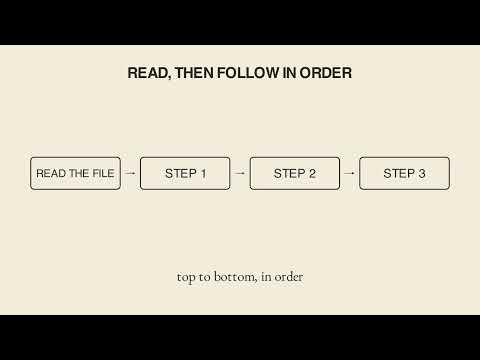
A Claude Skill is a folder holding one file, SKILL.md, that Claude reads before it starts and then follows step by step, in order. Investigation-open is a folder holding a single SKILL.md with instructions, in plain language, for opening a new investigation matter and running intake. Claude reads that file top to bottom and works through it step by step, branching only where the file itself says to.
Specification, not judgment
This structure makes a skill a specification, not new judgment. The payoff is consistency: the same intake runs for every matter, every time. The limit is scope: anything outside those written steps, and Claude has no special opinion about it. Investigation-open never gave Claude the power to decide when to investigate. It guarantees only that when the skill runs, Claude reads the same file and opens the matter and runs intake the same way each time. That's the whole mechanism.
Why deleting the skill changes nothing about authority
If the skills folder were deleted, Claude wouldn't lose any power to decide when to investigate, because it never had that power to begin with. What disappears is one specific intake checklist, not a decision-making capability. That distinction matters for anyone assessing what this kind of skill is actually responsible for versus what stays a human call.
What watching the intake run does and doesn't prove
Watching Claude open a matter and run a thorough intake doesn't prove it judged the underlying issue correctly. A checklist can be followed to the letter and still miss something it was never asked to check. Watching Claude leave a matter unopened doesn't prove something is wrong either; it may just be a case nobody asked it to open. Neither outcome is evidence about whether the underlying workplace issue was correctly assessed, because the skill's job is procedural intake, not investigative judgment.
Trying it yourself
Pick one recurring record you open the same way every time, a support ticket, an incident report, a new client file. Ask Claude to write a SKILL.md for it, plain language, ordered steps, then have it read the file back to you and walk through exactly what it will open and log before it opens anything. Running this against a record you actually handle repeatedly shows the same mechanism directly.
Key takeaways
- Claude's investigation-open skill is one plain-language SKILL.md describing how to open a matter and run intake.
- Claude follows the file's steps in a fixed order, branching only where the file explicitly says to.
- A skill is a checklist Claude executes, not a new power to decide when an investigation is warranted.
- The same intake runs for every matter, every time the skill executes; anything outside the written steps is still a human decision.
- A thorough intake or a skipped one proves nothing on its own about whether the underlying issue was judged correctly.
Who this is for
HR, legal, and compliance teams evaluating whether Claude can help standardize intake on new matters, and anyone who wants a clear picture of where a Skill's responsibility ends and human judgment begins.
Chapters
- 0:00The naive framing: "Claude launches an investigation"
- 0:11Sounds like investigative authority
- 0:20Broken, with a case — delete the folder, nothing is lost
- 0:31The anchor: one file — investigation-open's single SKILL.md
- 0:45Read it, then follow it in order
- 0:53Spec, not judgment — the payoff and the limit
- 1:05The anchor returns — same file, every run
- 1:19Both directions — neither one is proof
- 1:36Carry-out
- 1:50Your turn
- 2:06Outro
Full transcript(auto-generated, with timestamps)
The naive framing: "Claude launches an investigation"
[0:00]You guess Claude launches a new investigation on its own once it picks up a skill called investigation open. It doesn't. It opens the case file and runs intake. Let's see what's inside that file.
Sounds like investigative authority
[0:11]Here Claude has an investigation open skill and it sounds like Claude itself decides when a workplace issue becomes an investigation. But nothing in the model changes. Delete
Broken, with a case — delete the folder, nothing is lost
[0:21]The skills folder and Claude doesn't lose any power to decide when to investigate. It never had that power. It just stops running that one intake checklist. Here's what a skill actually
The anchor: one file — investigation-open's single SKILL.md
[0:31]Is, one file. Investigation open, for instance, is a folder holding a single skill. MD instructions for opening a new investigation matter and running intake written in plain language Claude reads before it starts. Claude reads that file
Read it, then follow it in order
[0:45]Top to bottom and works through it step by step in the order it's written, no branching unless the file itself says branch. That makes a skill a
Spec, not judgment — the payoff and the limit
[0:54]Specification, not new judgment. The payoff, the same intake every matter every time. The limit, anything outside those written steps and Claude has no special opinion about it. So investigation open never gave Claude the
The anchor returns — same file, every run
[1:06]Power to decide when to investigate. It just guarantees that every time investigation open runs, Claude reads that same file and opens the matter and runs intake the same way. That's the whole trick. Watching Claude open a
Both directions — neither one is proof
[1:19]Matter and run a thorough intake doesn't prove it judged the underlying issue correctly. A checklist can be followed to the letter and still miss what it was never asked to check. And watching it leave a matter unopened doesn't prove nothing's wrong. It may just be a case nobody asked it to open. A skill named investigation open doesn't hand Claude
Carry-out
[1:37]The power to decide when to investigate. It's a checklist Claude reads before it starts. So the same matter gets opened and the same intake runs every time and anything outside those steps is still on you. Your turn. Paste this into Claude. Pick
Your turn
[1:51]One recurring record you open the same way every time, a support ticket, an incident report, a new client file. Write me a skill MD for it, plain language, ordered steps. Then read it back to me and walk me through exactly what you'll open and log before you open it. Clawed investigation open. Lay him
Outro
[2:08]In for bear.