Claude, Investigation Memo.
Uses Claude's investigation-memo skill to show that producing a structured memo follows a fixed template Claude reads and follows, not evidence Claude judged what happened.
Claude has a skill called investigation-memo, and it's easy to read that as Claude having gained judgment about what actually happened in a given matter. It hasn't. A Claude Skill is a folder holding one file, SKILL.md, that Claude reads before it starts and follows step by step, in order. Investigation-memo follows a written template; it doesn't determine what happened or who's responsible.
What the skill actually is
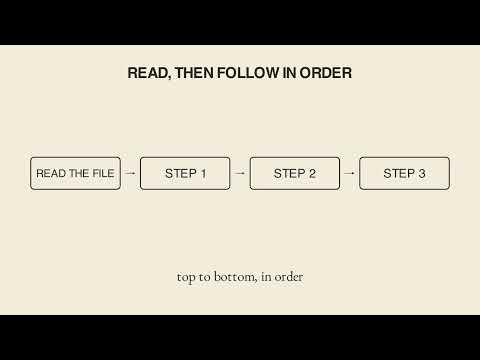
Investigation-memo is a folder holding a single SKILL.md with instructions, in plain language, for writing up an investigation in a fixed structure. Claude reads that file top to bottom and works through it step by step in the order written, branching only where the file itself says to. The memo's structure comes entirely from what's written in the file, not from any independent assessment of the underlying facts.
Specification, not judgment
This makes a skill a specification, not new judgment. The payoff is consistency: the same memo structure applies to every investigation, every time. The limit is scope: anything outside those written steps, and Claude has no special opinion about it. Investigation-memo never gave Claude judgment about what happened. It guarantees only that when the skill runs, Claude reads the same file and follows the same structure each time, which is a narrower and more useful claim than "Claude figured out the truth."
Why deleting the skill changes nothing about judgment
If the skills folder were deleted, Claude would lose no investigative judgment, because there was none there to begin with. What disappears is one specific template for writing up findings. That distinction, losing a template versus losing a capability, is exactly the point worth understanding before relying on a skill like this for anything consequential.
What the output does and doesn't prove
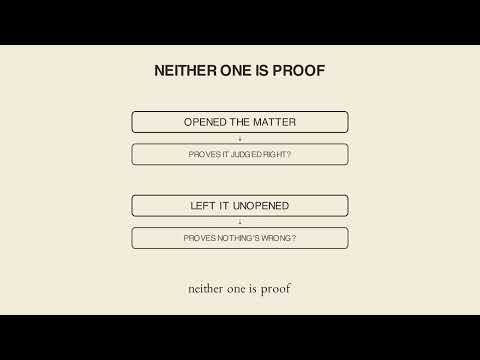
Watching Claude produce a thorough memo doesn't prove it correctly understood the investigation; it may simply have filled in the template's headings competently. Watching Claude produce a thin memo doesn't prove there's nothing substantive to report either; it may be a case the template's steps don't reach well. Neither outcome, thorough or thin, is proof about the quality of understanding behind it, because the skill's job is structural, not evaluative.
Trying it yourself
Pick one document you always structure the same way, an incident report, a status update, a closing summary. Ask Claude to write a SKILL.md for it, plain language, ordered steps, then have it read the file back to you and walk through exactly what it will write before writing it. Running this against a document you actually produce repeatedly shows the mechanism directly.
Key takeaways
- Claude's investigation-memo skill is one plain-language SKILL.md describing a fixed memo structure for writing up an investigation.
- Claude follows the file's steps in a fixed order, branching only where the file explicitly says to.
- A skill is a template Claude executes, not new judgment about what actually happened.
- The same memo structure applies to every investigation, every time the skill runs.
- A thorough memo or a thin one proves nothing on its own about whether the investigation was correctly understood.
Who this is for
HR, legal, and compliance teams evaluating whether Claude can help standardize investigation write-ups, and anyone who wants a realistic picture of what a Claude Skill contributes versus what still requires human judgment.
Chapters
- 0:00The naive framing: "Claude decides what really happened"
- 0:10Sounds like investigative authority
- 0:20Broken, with a case — delete the folder, nothing is lost
- 0:30The anchor: one file — investigation-memo's single SKILL.md
- 0:44Read it, then follow it in order
- 0:53Spec, not judgment — the payoff and the limit
- 1:05The anchor returns — same file, every run
- 1:17Both directions — neither one is proof
- 1:31Carry-out
- 1:44Your turn
- 2:00Outro
Full transcript(auto-generated, with timestamps)
The naive framing: "Claude decides what really happened"
[0:00]You guess Claude decides what really happened once it picks up a skill called investigation memo. It doesn't. It follows a written template. Let's see what's actually inside that file.
Sounds like investigative authority
[0:10]Here Claude has an investigation memo skill and it sounds like Claude itself got investigative authority, like it can determine what happened and who's responsible. But nothing in the model
Broken, with a case — delete the folder, nothing is lost
[0:21]Changes. Delete the skills folder and Claude doesn't lose any investigative judgment. There was none to begin with. It just stops following that one template. Here's what a skill actually
The anchor: one file — investigation-memo's single SKILL.md
[0:31]Is, one file. Investigation memo, for instance, is a folder holding a single skill, MD instructions for writing up an investigation in a fixed structure written in plain language Claude reads before it starts. Claude reads that file
Read it, then follow it in order
[0:45]Top to bottom and works through it step by step in the order it's written, no branching unless the file itself says branch. That makes a skill a
Spec, not judgment — the payoff and the limit
[0:53]Specification, not new judgment. The payoff, the same memo structure every investigation every time. The limit, anything outside those written steps and Claude has no special opinion about it. So investigation memo never gave Claude
The anchor returns — same file, every run
[1:07]Judgment about what happened. It just guarantees that every time investigation memo runs, Claude reads that same file and follows the same structure. That's the whole trick.
Both directions — neither one is proof
[1:17]Watching Claude produce a thorough memo doesn't prove it correctly understood the investigation. It may have just filled in the template's headings. And watching it produce a thin memo doesn't prove there's nothing there. It may be a case the template steps don't reach. A
Carry-out
[1:31]Skill named investigation memo doesn't hand Claude judgment about what happened. It's a template Claude reads before it starts, so the same structure comes out every time and anything outside those steps is still on you. Your turn. Paste this into Claude. Pick
Your turn
[1:45]One document you always structure the same way, an incident report, a status update, a closing summary. Write me a skill MD for it, plain language ordered steps. Then read it back to me and walk me through exactly what you'll write before you write it. Claude investigation memo lay him in for bear.