Claude, Internal Investigation.
Uses Claude's internal-investigation skill to show that organizing an investigation step by step is a fixed framework, not evidence Claude can judge who is at fault.
Claude has a skill called internal-investigation, which raises an obvious question: did it get judgment about who did something wrong? No. A Claude Skill is a folder holding one file, SKILL.md, that Claude reads before it starts and then follows step by step, in order. The internal-investigation skill follows a written framework for organizing an investigation; it does not decide fault.
What the skill actually is
Internal-investigation is a folder holding a single SKILL.md with instructions, in plain language, for organizing an investigation step by step. Claude reads that file top to bottom and works through it in the order written, branching only where the file explicitly says to. There's no separate reasoning layer deciding who is responsible for what; the file describes a process, and Claude follows it.
Specification, not judgment
This makes a skill a specification, not new judgment. The payoff is consistency: the same organizing framework applies to every investigation, every time. The limit is scope: anything outside those written steps, and Claude has no special opinion about it. Internal-investigation never gave Claude judgment about who did what. It guarantees only that when the skill runs, Claude reads the same file and follows the same framework each time.
Why deleting the skill changes nothing about judgment
If the skills folder were deleted, Claude would lose no investigative judgment, because there was none to begin with. What disappears is one specific organizing framework, not a capacity to determine fault. This is worth being precise about, because the skill's name alone suggests investigative authority that the actual mechanism doesn't grant.
What watching the output does and doesn't prove
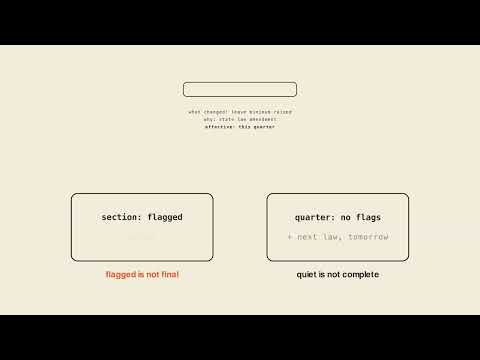
Watching Claude flag every irregularity in an investigation doesn't prove it understood what actually happened. A framework can be followed to the letter and still miss something it was never asked to check. Watching Claude flag nothing doesn't prove no wrongdoing occurred, either; it may simply be a case the framework doesn't cover. Neither outcome is proof one way or the other, because the skill's job is structural organization, not substantive determination.
Trying it yourself
Pick one process you run the same way every time, before opening a file, before closing one. Ask Claude to write a SKILL.md for it, plain language, ordered steps, then have it read the file back to you and walk through exactly what it will do before doing it. Running this against a process you actually repeat makes the mechanism concrete.
Key takeaways
- Claude's internal-investigation skill is one plain-language SKILL.md describing how to organize an investigation step by step.
- Claude follows the file's steps in a fixed order, branching only where the file explicitly says to.
- A skill is a framework Claude executes, not new judgment about who did something wrong.
- The same organizing framework applies to every investigation, every time the skill runs.
- Flagging every irregularity, or flagging none, proves nothing on its own about whether wrongdoing actually occurred.
Who this is for
Legal, HR, and compliance teams evaluating whether Claude can help structure internal investigations, and anyone who wants a clear picture of where a Skill's role ends and human judgment about fault begins.
Chapters
- 0:00The naive framing: "Claude decides who's at fault"
- 0:13Sounds like investigative authority
- 0:21Broken, with a case — delete the folder, nothing is lost
- 0:31The anchor: one file — internal-investigation's single SKILL.md
- 0:45Read it, then follow it in order
- 0:54Spec, not judgment — the payoff and the limit
- 1:06The anchor returns — same file, every run
- 1:19Both directions — neither one is proof
- 1:35Carry-out
- 1:47Your turn
- 2:01Outro
Full transcript(auto-generated, with timestamps)
The naive framing: "Claude decides who's at fault"
[0:00]You guess Claude decides who's at fault once it picks up a skill called internal investigation. It doesn't it follows a written framework for organizing the investigation itself. Let's see what's actually inside that file. Here Claude has an internal
Sounds like investigative authority
[0:13]Investigation skill and it sounds like Claude itself can run an investigation and decide who did something wrong. But nothing in the model changes. Delete
Broken, with a case — delete the folder, nothing is lost
[0:23]The skills folder and Claude doesn't lose any investigative judgement. There was none to begin with. It just stops following that one framework. Here's
The anchor: one file — internal-investigation's single SKILL.md
[0:31]What a skill actually is, one file. Internal investigation for instance is a folder holding a single skill. MD instructions for organizing an investigation step-by-step written in plain language Claude reads before it starts. Claude reads that file top to
Read it, then follow it in order
[0:47]Bottom and works through it step-by-step in the order it's written, no branching unless the file itself says branch. That
Spec, not judgment — the payoff and the limit
[0:54]Makes a skill a specification, not new judgement. The payoff, the same framework every investigation every time. The limit, anything outside those written steps and Claude has no special opinion about it. So internal
The anchor returns — same file, every run
[1:06]Investigation never gave Claude judgement about who did what. It just guarantees that every time internal investigation runs, Claude reads that same file and follows the same framework. That's the whole trick. Watching Claude flag every irregularity
Both directions — neither one is proof
[1:20]In an investigation doesn't prove it understood what happened. A framework can be followed to the letter and still miss what it was never asked to check. And watching it flag nothing doesn't prove no wrongdoing occurred. It may just be a case the framework doesn't cover. A skill named internal
Carry-out
[1:35]Investigation doesn't hand Claude judgement about who did what. It's a framework Claude reads before it starts. So the same steps run every time and anything outside those steps is still on you. Your turn. Paste this into Claude. Pick
Your turn
[1:48]One process you run the same way every time before you open a file, before you close one. Write me a skill MD for it, plain language ordered steps. Then read it back to me and walk me through exactly what you'll do before you do it. Claude internal investigation lay them
Outro
[2:03]In for bear.