Should You Respond to an Infringement Letter Right Away?
Liam walks through a four-check triage method for infringement and cease-and-desist letters, showing why urgent tone alone does not tell you which letter actually needs a fast response.
Getting an infringement or cease-and-desist letter tends to trigger an urge to respond immediately, because the language reads like an emergency: cease-and-desist wording, a threat to sue, a deadline in bold. Liam explains why that instinct is the wrong first move, and what triage looks like instead.
Tone is not the same as merit
Most incoming infringement claims are form letters mailed to hundreds of companies at once, with no evidence attached and nothing specific to the actual product. Rushing every one of those straight to an attorney means the one letter that is genuinely different waits in the same line as the form letters, and gets no faster a response than they do. The urgent tone of a letter says nothing on its own about whether the underlying claim has any weight.
Four checks to run against every claim
What actually determines urgency is a consistent set of four checks run against every letter: who is asserting the claim, what specific right they are claiming, what evidence is attached, and what deadline is demanded. The video anchors this with an example letter claiming a company's new packaging copies a competitor's, written with exclamation points and nothing else attached. On its own, that letter cannot be sorted as noise or as something serious. Only running it through the four checks tells you which one it is.
What checked actually reveals
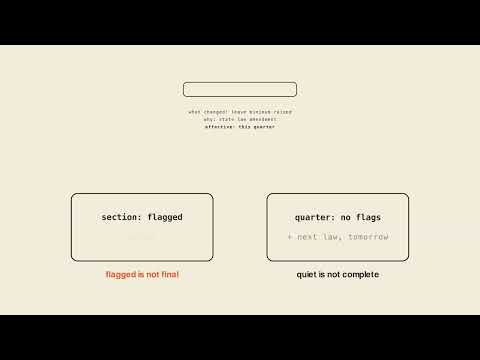
Running that anchor letter through the checks changes the picture. The asserter turns out to be a real competitor with a registered design. The evidence is a side-by-side photo. The deadline is ten days out. That combination of a real asserter, a specific right, actual evidence, and a firm deadline is what escalates the letter, not the exclamation points in the original tone. The opposite is also true: a bare form letter with nothing attached is not permanently zero risk. The same claim can come back later with evidence attached and become exactly this kind of letter that needs real attention.
What clearing the checks does and does not prove
Clearing all four checks does not prove the underlying claim is valid. It means the letter has enough substance that an attorney needs to look at it. Triage sorts letters by what is actually being claimed and what is actually attached, not by whether the wording sounds threatening. That sorting is what keeps a genuinely serious letter from sitting behind a stack of form threats that never had any evidence behind them in the first place.
Applying the four checks yourself
The video's suggested exercise is direct: take an actual infringement or cease-and-desist letter, or write a realistic one if none is on hand, and pull out the same four things. Who is asserting the claim. What specific right they are claiming. What evidence is attached. What deadline is demanded. Whichever of those four comes up empty on a real letter is the signal for how fast it actually needs to move, which is exactly the gap that judging a letter by its tone alone would miss.
Key takeaways
- Most infringement and cease-and-desist letters are form letters sent broadly with no evidence attached, and treating every one as urgent slows down the response to the letter that is actually different.
- Urgency should be determined by four checks: who is asserting the claim, what specific right is claimed, what evidence is attached, and what deadline is demanded.
- In the example, a threatening-sounding letter with no attachments became serious only once it showed a real asserter, a registered design, photographic evidence, and a ten-day deadline.
- Clearing all four checks does not prove a claim is valid; it means the letter has enough substance to warrant an attorney's review.
- A bare form letter is not permanently low risk; the same claim can return later with evidence attached and escalate.
Who this is for
This is for small business owners, founders, or anyone else who receives infringement or cease-and-desist letters and needs a consistent way to decide which ones need immediate attorney attention.
Chapters
Full transcript(auto-generated, with timestamps)
Do we need to respond right now?
[0:00]Someone gets an infringement letter and reaches to respond right away. Wrong first move. What actually comes first is triage. Lay them, take them through it. Every infringement letter can read like
Tone is not merit
[0:10]A fire cease and desist language, a threat to sue, a deadline in bold. The instinct is to rush each one straight to an attorney, but most incoming claims are form letters mailed to hundreds of companies at once with no evidence attached and nothing specific to your product. Rush every one of those to counsel and the one letter that's actually different weights in the same line. Four checks run against every
Four checks — the anchor
[0:30]Claim. Who's actually asserting it? What specific right they're claiming? What evidence is attached and what deadline they're demanding? Watch the anchor. A letter claiming your new packaging copy is a competitor's three exclamation points. No attachments, nothing filled in yet. That
Checked, not cleared
[0:45]Letter runs through the same four checks. The asserter turns out to be a real competitor with a registered design. The evidence is a side-by-side photo and the deadline is 10 days out. The combination is what escalates it, not the exclamation points. But clearing every check doesn't prove the claim is valid. It means an attorney needs to look. And a bare form letter with nothing attached isn't zero risk forever sent again with evidence. It can turn into exactly this. An infringement
Carry-out
[1:09]Letter's tone tells you nothing about its merit. Triage sorts by what's actually claimed, so the one letter that matters doesn't wait behind a stack of form threats.
Your turn
[1:18]Your turn. Here's the prompt, read it with me. Take an actual infringement or cease and desist letter or write a realistic one if you don't have one on hand. Ask Claude to pull out four things. Who's asserting the claim? What specific right they're claiming? What evidence is attached and what deadline is demanded? Whichever of those four comes up empty is what tells you how fast this really has to move. Lay them in for bare. Should you respond to an
Outro
[1:39]Infringement letter right away? Lay them in for bare.