Claude, Catalyst Calenda
The video explains that the catalyst calendar is not an app but a Claude Skill, a folder of instructions Claude reads before it acts. It shows how the steps run in order and why the same page produces the same result every time.
Someone new to Claude might wonder how the catalyst calendar app keeps track of upcoming events on its own. The video explains that it is not an app. It is a Claude Skill, a folder of instructions that Claude reads first. Using the catalyst calendar skill as its example, the video shows what is in such a folder and how Claude carries it out, in just over a minute.
The question: app or skill?
The video begins with the assumption that a tool like this works like a standalone application that tracks events by itself. It sets that aside immediately. What really happens is that Claude reads written instructions and then acts on them. The rest of the video explains the mechanism behind that and why it is more predictable than a hidden piece of software would be.
A skill is a folder Claude reads
A skill is a folder that Claude reads before it works. Here the folder is catalyst calendar. The SKILL.md file holds the full instruction set in plain language, with no hidden logic. Claude reads it and then acts. The video's short summary is that the file is the program, so reading the page tells you what the skill will do.
The pipeline: read, execute, return
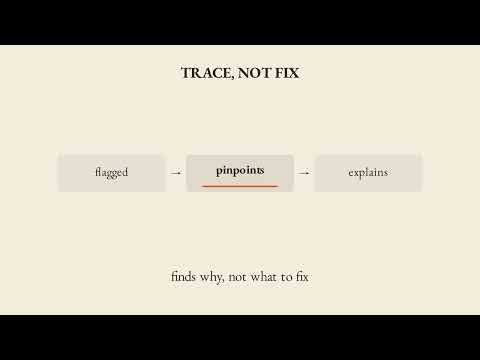
The pipeline lives in the steps section of the file. Claude reads each step in order and executes it. The flow is linear, with no branching unless a step says so. Nothing happens outside the sequence that is written down.
What the page says, exactly
The catalyst calendar skill is described as a specification written as an instruction set. Its job is to build and maintain a calendar of upcoming catalysts across a coverage universe. The catalysts it names are:
- earnings dates
- conferences
- product launches
- regulatory decisions
- macro events
Because Claude follows exactly what is written, the result is the same every run. The flip side is that the skill only covers what the page says. Anything not on the page is not part of what the skill does.
What a skill adds
The carry-out is brief. A skill does not make Claude smarter. It makes Claude follow your steps in order, every time. The value is repeatability and transparency, not extra intelligence.
Key takeaways
- The catalyst calendar is not an app; it is a Claude Skill.
- A skill is a folder of instructions that Claude reads before it works.
- The SKILL.md file contains the full instruction set in plain language, with no hidden logic.
- Claude reads each step in order and executes it, with no branching unless a step says so.
- The catalyst calendar skill builds and maintains a calendar of upcoming catalysts across a coverage universe.
- The catalysts include earnings dates, conferences, product launches, regulatory decisions and macro events.
- Because Claude follows the page exactly, results are the same every run, and the skill only covers what the page says.
Try it yourself
Paste a prompt into Claude asking it to explain what a Claude Skill is. Then say you have written a three-step SKILL.md for making coffee, and ask it to walk you through exactly how it would read and follow that file, step by step, before it starts. Watching it name the steps before it begins is what shows you the mechanism is real.
Chapters
Full transcript(auto-generated, with timestamps)
The question — is it an app, or a skill?
[0:00]Someone might ask how the Catalyst Calendar app tracks events on its own. It's not an app, it's a skill, a folder of instructions Claude reads first. So, how does the Catalyst Calendar skill track events? A skill is a folder Claude
Anatomy — a skill is a folder
[0:12]Reads before it works. This one is Catalyst Calendar, the skill. MD contains the full instruction set, plain language, no hidden logic. Claude reads it then acts. The file is the program. The pipeline is in the step section.
Pipeline — read, execute, return
[0:25]Claude reads each step in order and executes it. Linear, no branching unless the step says so. Catalyst Calendar is a specification
Mechanism — what the page says, exactly
[0:33]Written as an instruction set. Build and maintain a calendar of upcoming catalysts across a coverage universe, earnings dates, conferences, product launches, regulatory decisions, and macro events. Because Claude follows exactly what's written, the result is the same every run, and it only covers what the page says.
Carry-out
[0:51]A skill doesn't make Claude smarter, it makes Claude follow your steps in order every time.
Your Turn
[0:56]Your turn. Paste this into Claude. Explain what a Claude skill is then if I wrote a three-step skill, MD for making coffee, walk me through exactly how you'd read and follow it step-by-step before you start. Watching it name the steps before it starts is what shows you the mechanism is real.
Outro
[1:12]Claude Catalyst Calendar, Liam in for bear.