What Does Claude Actually Do When You Say \"Clean This Data\"?
The video explains that asking Claude to clean a spreadsheet runs one fixed checklist of six operations, not general judgment. A cleaned column has been reformatted, not fact-checked, and anything outside the checklist is left untouched.
It is tempting to imagine that when you ask Claude to clean a messy spreadsheet, it looks over the sheet, decides what seems wrong and fixes it however it thinks best. The video explains that this is not what happens. Anthropic's clean-data-xls skill follows a written instruction file and runs one fixed checklist, and the difference matters for how much you can trust the result.
Judgment or checklist
The common guess is that "clean this data" hands the decision to Claude's own judgment. The video says the skill instead runs a fixed list of six operations: trim whitespace, fix inconsistent casing, convert numbers stored as text, standardize dates, remove duplicates, and flag mixed-type columns. It does nothing beyond that list. The skill does not decide what "clean" should mean, and it does not invent a fix for a problem that is not on the checklist.
A problem the checklist does not cover
To show the limit, the video gives an example of something outside the list: a column where the same currency symbol covers two different currencies, with no way to tell them apart. No step in the checklist resolves currency confusion. As a result, the column comes out exactly as ambiguous as it went in. The skill is not hiding the problem; it simply has no step that addresses it.
One column through the checklist
The video follows a single anchor example, a revenue column holding " 1,200 ", "1300", "N/A" and " 1,400.00 ". The steps run in order. Whitespace is trimmed, and the number-like text converts into real numbers. The "N/A" entry cannot be converted, so the column is flagged as mixed type instead. Then the skill stops and waits for a person to look at it.
Clean does not mean correct
The video draws two cautions from the revenue example. First, converting "1,200" into a number does not show that it is the right number. A typo that should have read 12,000 would convert just as cleanly. Second, a flagged mixed-type column is not automatically broken. An ID column that mixes numbers and letters on purpose receives the same flag. In both cases the cleaned sheet still waits for someone to check what the checklist cannot, which is whether the values themselves are correct.
The carry-out
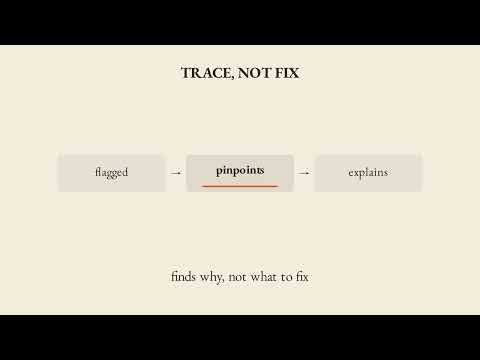
The summary line is that Claude does not judge what looks messy and fix it. It runs one fixed checklist in order, and anything outside that list is untouched. A column that comes back clean has been reformatted, not fact-checked.
Key takeaways
- Clean-data-xls follows a written instruction file and runs six fixed operations in order.
- The six steps are trimming whitespace, fixing casing, converting text to numbers, standardizing dates, removing duplicates and flagging mixed-type columns.
- Problems outside the list, such as one currency symbol covering two currencies, come out unchanged.
- Text that converts to a number has been reformatted, not verified as correct.
- A mixed-type flag is a prompt to look, not proof that a column is broken.
- A person still has to check whether the values themselves are right.
Try it yourself
Give Claude a spreadsheet with a messy column, for example mixed date formats, extra whitespace and a duplicate row or two, and ask it to run the clean-data-xls skill. Then add one problem that is not on the checklist, such as a currency symbol covering two currencies, and run it again. Watching what changes and what stays the same is the quickest way to see the fixed checklist at work.
Chapters
Full transcript(auto-generated, with timestamps)
What decides what gets cleaned — judgment?
[0:00]Someone asks whether cleaning messy spreadsheet data means Claude uses its own judgment. It doesn't. Liam is here to take you through exactly what the skill does step-by-step. The natural
Judgment, or a checklist?
[0:10]Guess is that clean this data means Claude decides using its own judgment what looks wrong and fixes it. But the skill runs one fixed checklist. Trim white space, fix inconsistent casing, convert numbers stored as text, standardize dates, remove duplicates, and flag mixed type columns, nothing more. Give it a column where the same currency symbol covers two different currencies, no way to tell them apart. That's not on the checklist. No step resolves currency confusion. So, the column comes out exactly as ambiguous as it went in.
One column, four stops
[0:39]What the skill actually does, it runs six fixed steps in order. Trim, fix casing, convert numbers, standardize dates, dedupe, flag mixed types, nothing beyond that list. Watch the anchor one revenue column holding 1 200 1300 n/a and 1 400 0 0. White space gets trimmed. The number-like text converts to real numbers. n/a it can't convert. So, the column gets flagged mixed type instead. Then it stops waiting.
Flagged, waiting
[1:05]The revenue column comes back trimmed, converted, and flagged. n/a still sitting there marked for a human to look at. But converting 1 200 to a number doesn't mean it's the right number. A typo that should read 12 0 0 0 converts just as cleanly. And a flagged mixed type column isn't automatically broken. An ID column that mixes numbers and letters on purpose gets the same flag. Either way, the clean sheet still waits for someone to check what the checklist can't, whether the values themselves are correct. Clean this data doesn't mean
Carry-out
[1:34]Claude judges what looks messy and fixes it. It runs one fixed checklist in order, and anything outside that list is untouched. A column that comes back clean has been reformatted, not fact-checked. Your turn. Here's the
Your turn
[1:47]Prompt, read it with me. Give Claude a spreadsheet with a messy column, mixed date formats, extra white space, a duplicate row or two, and ask it to run the clean data xls skill. Then add one problem that's not on its checklist, like the same currency symbol covering two different currencies, and run it again. Watch what changes and what doesn't. Lay 'em in for bare. What does
Outro
[2:06]Claude actually do when you say clean this data? Lay 'em in for bare.