How Does Claude Prep for a Due Diligence Meeting?
This short video explains that Claude does not prep for diligence calls from a private sense of what makes a sharp question. The dd-meeting-prep skill matches the meeting type to a template and builds questions, benchmarks and red flags from it.
Ask Claude to prep you for a diligence call and it is tempting to picture it drawing on a private sense of what makes a sharp question, the feel an experienced deal person has. This video from Humanitarians AI, narrated by Liam, explains that this is not what happens. Anthropic's dd-meeting-prep skill works from a written SKILL.md and from the meeting type you give it.
Instinct or a written procedure
The natural guess is that Claude asks whatever an experienced deal person might ask on instinct. The video says the skill does not work that way. It reads which meeting you are prepping for: a management presentation, an expert network call, a customer reference or an advisor session. It then builds a targeted question list, the benchmarks to reference and the red flags to probe, all from what the file already defines for that meeting type.
The consequence is stated directly: ask it to prep a meeting type the file does not cover and it has nothing tailored to reach for.
One question, four stops
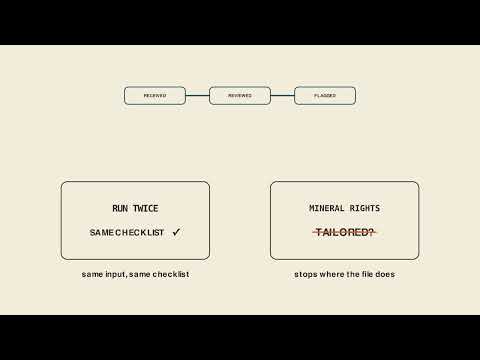
The skill's steps are to match the meeting type to its template, generate the question list, attach the benchmarks and mark the red flags to probe. The video follows one example, an expert network call about a staffing company. A single question, same-store margin trend, goes through four stops:
- It is drafted.
- A benchmark is attached.
- It is asked live on the call.
- It comes back flagged, because the expert's answer leans on one large client.
That flag surfaces because the question was built to probe for exactly that. The skill escalates what its template already watches for and does not go hunting beyond it.
Repeatable, and bounded by the file
Two further behaviors follow. Prepping the same expert network call twice returns the same question list, benchmarks and red flags both times. And a meeting type the file never described, the video's example being a regulator sit-down, gets nothing tailored: the prep stops exactly where the SKILL.md does.
The video's summary is that Claude's due diligence meeting prep is not insider instinct about what to ask. It is a written procedure that turns the meeting type into a question list, benchmarks and red flags, and it covers only the meeting types the file defines. The video makes no claim about specific companies, questions or benchmark figures.
Key takeaways
- Claude's dd-meeting-prep skill does not rely on private instinct about which questions matter.
- It supports four meeting types: management presentations, expert network calls, customer references and advisor sessions.
- For a given type, it builds a question list, benchmarks to reference and red flags to probe from the file's definitions.
- In the staffing company example, the same-store margin trend question is flagged because the expert's answer leans on one large client.
- The skill flags what its template already watches for rather than searching beyond it.
- Prepping the same call twice produces identical questions, benchmarks and red flags.
- For an undescribed meeting type, such as a regulator sit-down, there is nothing tailored to use.
Try it yourself
Tell Claude you are prepping for an expert network call on a staffing company and ask it to run the dd-meeting-prep skill: build the question list, the benchmarks it attaches and the red flags it would probe. Then ask for a meeting type you have never mentioned supporting. Seeing whether it invents a bespoke line of questioning or tells you plainly it has nothing tailored is the fastest way to see that the prep comes from a written file. The code is in the humanitarians-youtube repository.
Chapters
Full transcript(auto-generated, with timestamps)
What decides the questions — instinct?
[0:00]Someone asks whether Claude just knows the sharp questions to ask on a diligence call from instinct. It doesn't. Liam is here to take you through what the skill actually does step-by-step. The natural guess is that
Instinct, or a written procedure?
[0:11]Claude draws on some private sense of what makes a sharp diligence question and asks whatever an experienced deal person might ask on instinct. But the skill doesn't work that way. It reads which meeting you're prepping for a management presentation, an expert network call, a customer reference, or an advisor session, then builds a targeted question list that benchmarks to reference and the red flags to probe. All from what the file already defines for that meeting type. Ask it to prep a meeting type the file doesn't cover and it has nothing tailored to reach for.
One question, four stops
[0:40]What the skill actually does, match the meeting type to its template, then generate the question list, attach the benchmarks, and mark the red flags to probe. Watch the anchor an expert network call about a staffing company. One question, same store margin trend gets drafted, gets a benchmark attached, gets asked live on the call, and comes back flagged. The expert's answer leans on one large client. That flag surfaces
Same questions, or stops there?
[1:02]Because the question was built to probe for exactly that. The skill escalates what its template already watches for. It doesn't go hunting beyond that. Prep the same expert network call twice and the question list, benchmarks, and red flags come back identical both times. But ask for meeting type the file never described, say a regulator sit-down, and there's nothing tailored to reach for. The prep stops exactly where skill MD does. A Claude due diligence meeting
Carry-out
[1:25]Prep isn't insider instinct about what to ask. It's a written procedure that turns the meeting type into a question list, benchmarks, and red flags to probe, and it only covers meeting types the file defines.
Your turn
[1:37]Your turn. Here's the prompt, read it with me. Tell me you're prepping for an expert network call on a staffing company and run the DD meeting prep skill. Build the question list, the benchmarks it attaches, and the red flags it would probe for. Then ask for meeting type you've never mentioned supporting and see whether new questions get invented or the prep stops where the file does. Liam in for Bear. How does Claude prep for a due diligence meeting?
Outro
[1:59]Liam in for Bear.