Claude Reviewed My NDA. Here's Why "Nothing Flagged" Isn't a Green Light
An NDA review with Claude compares clauses to a baseline of standard terms and flags what is unusual. The video shows why a clean result is not a green light and why flagged clauses still need a check against the law that applies.
Someone hears that Claude reviewed their NDA and flagged nothing, and concludes the document is fine to sign. The video says that is the wrong reading. Claude reviews a contract by flagging what is unusual against a standard baseline. It does not give final legal sign-off, and a clean result is not a green light.
Review is not clearance
The video begins by correcting a word. Claude does not clear an NDA. It reviews it, flagging what stands out against a baseline of standard terms. The right question is not whether Claude can clear the document, but what a review actually catches and what it leaves open.
A clause quietly missing one thing
The video builds its case on a specific gap. Imagine a confidentiality clause that never carves out information that later becomes public through no fault of anyone, for instance when a competitor publishes it first. That clause reads like a complete, ordinary definition section, and it sits right next to other clauses that do include the standard carve-outs.
A review that only catches obvious red flags can miss a gap like this, because what is missing leaves nothing on the page to stand out.
The three-part structure
The video describes an NDA review that works as three parts:
- The clauses go in.
- They are checked against a baseline of standard terms, covering definitions, carve-outs, duration, and mutuality.
- A flag list of what is unusual comes out.
Flagged, then checked
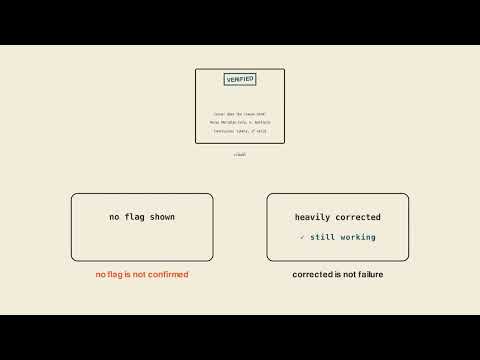
In the video's example, the same confidentiality clause comes back marked in the margin. The note says it is flagged, with no carve-out for public information. That is not confirmation of a problem. It is a prompt to look closer.
The next step is that someone who knows the law that actually applies checks the flagged clause. What counts as a reasonable carve-out or duration differs by state and by deal. Only after that check does the clause move from flagged to either fine after all or something that needs to change.
Two limits in both directions
The video states the limits plainly. A review only catches gaps measured against its baseline, so a clause outside that baseline can slip through clean. And a heavily flagged NDA is not automatically a bad deal. In both cases, flagged means check this, not reject this.
Key takeaways
- Claude reviews an NDA and flags unusual items. It does not clear it as a final legal sign-off.
- A clean result does not mean the NDA is safe to sign.
- A missing carve-out can sit unnoticed next to clauses that include the standard ones.
- A working review has three parts: clauses in, a check against standard terms, and a flag list out.
- The baseline covers definitions, carve-outs, duration, and mutuality.
- Flagged means check this, not reject this.
- Carve-out and duration norms vary by state and by deal, so the applicable law decides.
Try it yourself
Paste an NDA you are reviewing into Claude and ask it to check the document against standard confidentiality carve-outs: public information, independent development, prior knowledge, and legally required disclosure. Ask it to flag anything missing or unusual. Then have someone who knows the law that applies check every flagged clause before you sign.
Full transcript(auto-generated, with timestamps)
[0:00]Someone assumes an NDA review means Claude clears it, a final legal sign-off. Wrong word. Claude reviews it, flagging what's unusual against a standard baseline. Liam, take them through it. It's tempting to think an NDA review that flags nothing means the NDA is fine to sign. But say the confidentiality clause never carves out information that later becomes public through no fault of anyone. Say a competitor publishes it first. That clause reads exactly like a complete ordinary definition section sitting right next to every other clause that does include the standard carve-outs. A review that only catches obvious red flags can miss the gap that's just quietly missing.
[0:37]An NDA review that actually works is three parts. The clauses in, a check against a baseline of standard terms, definitions, carve-outs, duration, mutuality, and a flag list of what's unusual out. Watch the anchor. That same confidentiality clause comes back stamped in the margin, not confirmed a problem. Flagged, no carve-out for public information. That flagged clause gets checked by someone who knows the law that actually applies. What counts as a reasonable carve-out or duration differs by state and by deal. Only then does it move from flag to either fine after all or something that needs to change. But nothing flagged doesn't mean nothing's wrong. A review only catches
[1:13]Gaps against its baseline, and a clause outside the baseline slips through clean. And a heavily flagged NDA isn't automatically a bad deal. Either flagging means check this, not reject this. A clean NDA review isn't a green light. It's only checked when someone reads the flagged clauses against the law that actually applies. Your turn. Here's the prompt. Read it with me. Paste in an NDA you're reviewing. Ask Claude to check it against standard confidentiality carve-outs, public information, independent development, prior knowledge, legally required disclosure, and flag anything missing or unusual. Then have someone who knows the law that applies check every flagged clause before you sign. Liam, in for Bear. Does
[1:52]A clean NDA review mean it's safe to sign? Liam, in for Bear.
More from Claude
 1:55
Only the Terminal Says Yes. — The Discord Access-Control Skill
 1:59
Claude Wrote My Legal Memo. One Citation Was Quietly Dead
 2:26
Your Agent Never Fires If Its Description Lists Skills
 1:52
Does Claude Already Know Every Matter You Have? (No — Here's Why)
 2:56
MCP Apps: Your Tool Doesn't Serve the Widget's HTML
 2:10