Claude, Clearance. — YouTube metadata
Liam explains the clearance Claude Skill, which screens a proposed name or mark against the sources and criteria a SKILL.md specifies, returning a structured report while the final use decision stays with the reader.
Can Claude give a trademark final legal clearance? Liam's answer is direct: not quite. Anthropic's clearance Skill screens a proposed name against the sources and criteria a SKILL.md file specifies and returns a structured report, but deciding what is actually clear to use stays with the person running it.
A skill is a folder, not a legal opinion
clearance follows the same pattern as other Claude Skills: it is a folder Claude reads before it works. The SKILL.md file inside holds the full instruction set in plain language, with no hidden logic sitting outside it. Claude reads the file, then acts, the file is the program, not some general legal judgment the model is applying on its own.
How the pipeline runs
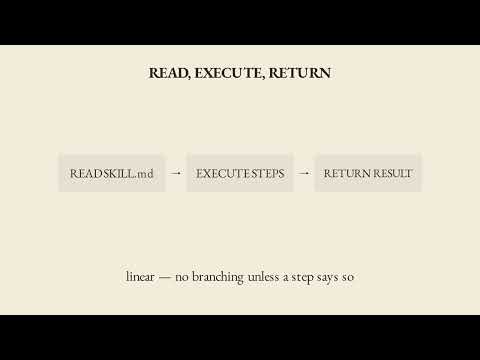
The pipeline lives in the file's step section. Claude reads each step in order and runs it, linear execution, with no branching unless a specific step calls for one. For a trademark screen, that predictability matters: the report reflects a fixed, inspectable procedure rather than an opaque judgment call.
What the skill actually screens against
The constraint is specific. The skill screens the proposed name or mark against the sources and criteria the file specifies, then flags anything that matches. It does not weigh legal risk or render a verdict, it runs a checklist and reports what it finds. Stay inside that checklist and the report holds its shape every time: same checklist in, same clearance report out, run after run.
What still belongs to the reader
The video is explicit about the boundary: deciding what is actually clear to use is still the reader's decision, not the skill's. A structured report that lists what matched a fixed set of sources and criteria is not the same thing as a legal clearance opinion, and the video is careful not to blur that line, it is framed throughout as an educational explainer, not legal advice and not affiliated with Anthropic.
The Your Turn prompt
The video closes with a paste-ready prompt for anyone who wants to try this directly: describe being about to publish a new product name with a short list of existing marks it might conflict with, ask Claude to read the clearance skill and state exactly what it needs before running any check, then have it screen the name against the short list and explain what it flags and why. Asking for the needed inputs up front is what turns the skill into something checkable rather than a black-box report.
Key takeaways
- clearance is a folder holding a SKILL.md file, read and followed step by step by Claude, not a trained legal judgment.
- The pipeline runs linearly, with no branching unless a step specifies it.
- The skill screens a name against fixed sources and criteria and flags matches, rather than issuing a legal ruling.
- Same checklist, same input, produces the same structured report every run.
- The decision about what is actually clear to use remains the user's, not the skill's.
Who this is for
Founders, marketers, and legal staff evaluating whether an AI tool can support early-stage trademark screening, and anyone who wants a plain explanation of how a Claude Skill turns a fixed checklist into a repeatable report.
Chapters
Full transcript(auto-generated, with timestamps)
Cold open — can Claude give a trademark final legal clearance?
[0:00]Someone wondered, can Claude give a trademark final legal clearance? Not quite. It screens the name against a fixed checklist and reports what it finds. Here's what actually happens when you run it. A skill is a folder Claude
Anatomy — a skill is a folder
[0:12]Reads before it works. This one is clearance. The skill MD file holds the full instruction set in plain language, no hidden logic. Claude reads it then acts. The file is the program.
Pipeline — how the skill works
[0:23]The pipeline sits in the step section. Claude reads each step in order then runs it. Linear, no branching unless a step says so. The constraint is specific. Screen the
Mechanism — the interesting constraint
[0:32]Proposed name or mark against the sources and criteria the file specifies, then flag anything that matches. Stay inside that checklist and the report holds its shape every time. Same checklist in, same clearance report
Carry-out
[0:45]Out every time. Deciding what's actually clear to use is still yours.
Your turn
[0:50]Your turn. Here's the prompt, read it with me. I'm about to publish a new product name and I have a short list of existing marks it might conflict with. Read the clearance skill, tell me exactly what you need from me before you run any check, then screen the name against my short list and tell me what it flags and why. Claude clearance, lay 'em in for bear.