Lyrical Literacy AI Tools
Watch on YouTubeEmpowering learning through science-based AI tools that create engaging educational songs and complementary visual art. Our research-driven approach combines neuroscience, cognitive psychology, and multimedia learning principles to enhance cognitive development.
Our AI Tools
Humanitarians AI has developed two complementary AI tools based on extensive research in cognitive science, multimedia learning, and educational psychology. These tools work together to create powerful multimodal learning experiences that engage multiple brain regions simultaneously.
Lullabize
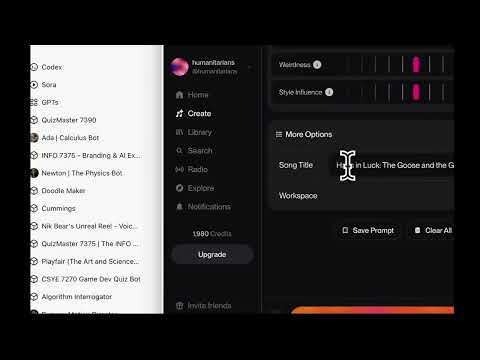
A specialized AI tool for creating educational songs and lyrics based on cognitive learning theory. Lullabize helps generate musical content specifically designed to enhance memory formation, language acquisition, and emotional development.
OpenAI GPT
Advanced prompt engineering for creating educational lyrics with structured syllabic patterns and cognitive scaffolds.
Google Gemini
Specialized version for generating educational songs with multimodal understanding of learning contexts.
Klee
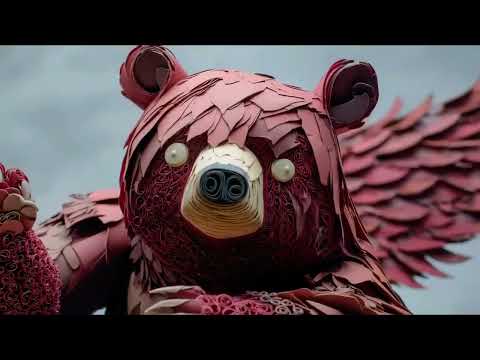
Named after artist Paul Klee who explored the relationship between music and visual art, this tool creates complementary visuals for educational songs using research-based principles of engagement.
OpenAI GPT
Generates detailed prompts for creating art that enhances learning through visual-auditory integration.
Google Gemini
Multimodal version that can analyze songs and generate complementary visual concepts.
The Science Behind Our Tools
Our tools aren't just creative - they're built on rigorous scientific research into how the brain learns. We've synthesized findings from neuroscience, cognitive psychology, and multimedia learning theory to create AI tools that generate genuinely effective educational content.
Cognitive-Musical Prompting
Lullabize uses our research-based "Tripartite Prompting Model" that precisely controls rhythm, melody-affect, and lyrical content to target specific learning outcomes like mnemonic recall, emotional regulation, and language acquisition.
Visual-Cognitive Engineering
Klee implements Norman's Three Levels of Design (Visceral, Behavioral, Reflective) and uses principles like the Coherence Principle and Signaling Principle to create art that enhances learning without adding extraneous cognitive load.
See Our Tools In Action




Applications & Benefits
Enhanced Learning Outcomes
Our tools create multimodal experiences that engage both auditory and visual processing channels, improving comprehension, retention, and cognitive transfer. Research shows this approach leads to deeper learning than single-channel instruction.
Social-Emotional Development
Songs and visuals created with our tools are designed to scaffold emotional awareness, empathy, and self-regulation skills. Our research-based approach incorporates Joint Media Engagement principles to encourage parent-child interaction.
Language Acquisition Support
Lullabize can target specific language learning goals through controlled vocabulary, syllabic patterns, and grammar structures, while Klee creates visuals that enhance comprehension and retention of language concepts.
Accessibility & Inclusion
Our tools can be customized to create content for diverse populations, including those with learning differences, language barriers, or neurodevelopmental conditions, making education more engaging and effective for all learners.
Explore the Research
The effectiveness of our tools is grounded in extensive scientific research. We've published our frameworks and findings to contribute to the field of educational technology and cognitive science.
Lullabize Research
Our comprehensive framework for engineering songs that enhance cognitive development, including the Cognitive-Lyrical Prompting Matrix and evidence-based strategies for creating educational music.
Read the ResearchKlee Research
Our framework for creating art that complements educational music, based on principles from multimedia learning theory, emotional design, and Joint Media Engagement research.
Read the Research